
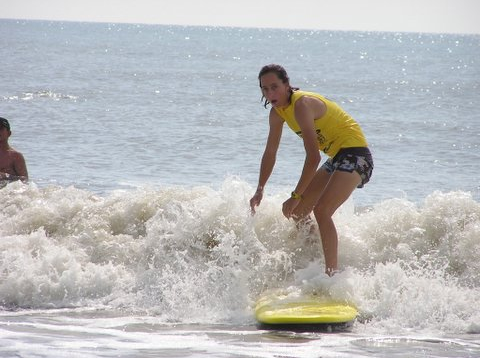
TL;DR:Take them to the water After my stroke I told my physical therapist Dave Nitti that I wanted to surf again. He did not tell me it was a lovely goal for someday. He got in the ocean with me, and he was the first person standing there when I stood up on a board.
I had a stroke at fifteen and woke up paralyzed on my right side. Somewhere in the long middle of learning to walk again, I told Dave Nitti that I wanted to surf. I knew exactly how that sounded coming out of my mouth. I said it anyway, the way you say a thing you have decided to want before anybody has given you permission.
He did not say that was a great goal and that he thought I would get there one day.
He took me to the beach. He got in the water with me. He was the first person standing there when I stood up on a surfboard again.
He did that with everything. When I said I wanted to ride a bike, he put me on a bike and ran alongside it. My first steps toward running were next to him. He never missed a session. I never once had to wonder whether he believed me — which is a strange and enormous gift to hand a teenager who has stopped believing herself.
I work as a healthcare keynote speaker now, and this is the story clinicians ask me about most. What they usually want to know is how to answer a goal they privately think is out of reach. Here is the honest answer. You do not have to promise it. You just have to be willing to drive.
I have found that the things that make me the happiest are also the things that take the most courage.
— I’m Not Limping. That’s Swagger!, Chapter 2
I have known Dave for almost nineteen years. There is no version of Kelsey Tainsh that happens without him.
When a patient names something that sounds out of reach
- Do not grade the goal out loud. Ask what the first step is.
- Put them near the real thing early, even in a small way.
- Show up for the attempt. Belief people can see is the treatment.
Chapter 8 of my book is mostly me trying to thank the people who did this for me, and Dave gets a lot of it. If your therapy or nursing teams could use a morning with somebody who was the patient on the other end of that belief, that is the room I love most as a healthcare keynote speaker.
Book: https://kelseytainsh.com/kelseys-book/ · Speaking: https://kelseytainsh.com/nursing/
What clinicians ask me about this one
What if a patient’s goal genuinely is not achievable?
Then work the first step anyway and let reality do the talking. Nobody knew whether I would surf. Dave did not pretend to know either, which is exactly why I trusted him. If the goal turns out to be out of reach, we find that out together in the water, and the patient still spent those months working instead of grieving.
Isn’t it cruel to encourage hope that might not pan out?
What actually hurt me was the opposite. Being handled gently, with careful language about realistic expectations, told me the adults had already done the math on my life. False promises are unkind. Refusing to try is worse. There is a lot of room between those two, and that room is where every good therapist I have known lives.
How do you find a therapist who will work like that?
Listen to how they respond the first time you say something ambitious. Dave’s belief in me started from the moment he said hello, and I could hear it. If somebody flinches when you name a goal, or changes the subject to your limitations, they may still be very skilled. They are just not going to get in the water.
Quote Q11 pulled from Chapter 2. Confirm against print edition before publishing.
Recent Comments