
Blog

Should a bad first grade make you drop the class?
TL;DR: No. I got an F on my first college English paper and I cried like it was the end of the world. I stayed in the class anyway. By the end of that semester I had one of the top grades in it, and I had finally learned how to write. English was an elective. I took...
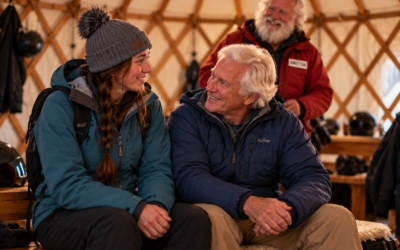
How do you help someone without making it a big deal?
TL;DR: You do it before anybody has to ask, and then you say nothing about it. My first day of adaptive snowboarding, I walked into a packed yurt in Pennsylvania and could not find anywhere to sit. A man with white hair scooted over and made room. That is the whole...

Why does a stroke patient stop talking?
TL;DR: Usually because talking makes us feel stupid, not because we have nothing to say. After my stroke at fifteen I had word-finding trouble. I could look straight at an object, know exactly what it was, and never reach the word for it. So I went quiet at the...

Why do nurses remember what a patient is most afraid of?
TL;DR: Because somebody asks, and somebody else carries it. I was fifteen, a few months out from my second brain surgery, and I told my doctors the thing I feared most was losing my hair. I woke up with most of it still there. My nurses did that, and I did not learn...

What Does Real Support Look Like
TL;DR:You find one person willing to be your hands. After brain surgery left me foggy, I couldn't get through the SAT alone. Holly Camorata sat with me on weekends, reading each question aloud as many times as I needed, and filling in the bubbles with a #2 pencil. I...
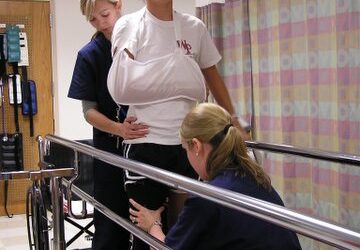
Does rehab feel hopeless when you start?
TL;DR: Often, yes, and the feeling lies. I rolled into the Shepherd Center at six in the evening, stared at the sunset, and thought I'd be in a wheelchair forever. I was fifteen and completely sure of it.I was also completely wrong, and the next morning the work began...

Should you let people see what you carry?
TL;DR: Yes, when you choose the moment. At the ATI Super Conference in 2018, Richard Menneg who hired me to speak asked me to carry my heavy backpack on stage. I thought it was just my bag. He was showing a whole room what I'd hauled around for years, long before I...
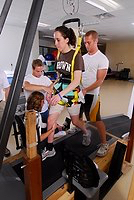
How do you learn to run again after a stroke?
TL;DR: You start on a treadmill with a harness holding most of your weight, and a therapist who decides today is the day. I had a stroke at fifteen and forgot how to run. When I was strong enough my physical therapist said we'd try anyway. I told her I didn't remember...
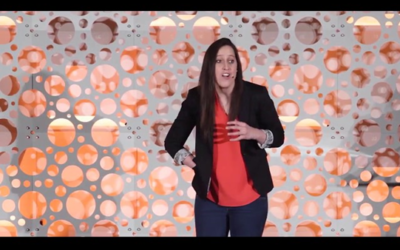
Does a limp always mean what you think it means?
TL;DR: Not even close. I once watched a police officer drag his foot across a sidewalk and felt an instant kinship, so I stopped him to say his limp gave me courage. He turned to me with the kindest eyes and explained he'd just stepped in dog poop and was trying to...
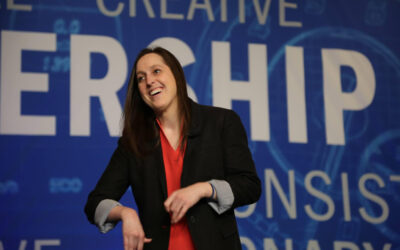
Why did a client ask me to carry my backpack on stage?
TL;DR Because he saw something I hadn't. On March 22, 2018, Richard Menneg booked me as the youngest speaker ever to keynote the ATI Super Conference. He asked me to bring my heavy backpack on stage. I thought it was just my bag. But he was showing the room what I...
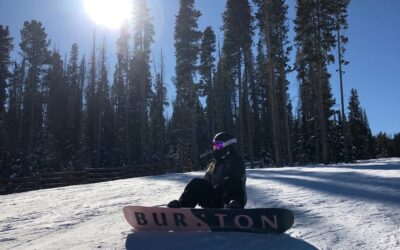
Is it worth emailing a stranger who doesn’t know you?
TL;DR: Yes, and the odds are better than they feel. On August 8, 2019, I found the most senior person at Burton I could and emailed them cold. Five days later, on August 13, a real reply came back. Asking cost me almost nothing. Asking for help has always been hard...

Should a leader show up for the thing they doubted?
TL;DR: Yes, and the way this CEO did it stuck with me. On May 10, 2018, I spoke at Atrius Health's nursing conference in Boston. The event planner wanted me. The CEO wasn't sure I was the right fit. She booked me anyway, and he sat in the back for every single minute....
Book Kelsey to Make Your Next Event an Awesome Experience!