
TL;DR: You start on a treadmill with a harness holding most of your weight, and a therapist who decides today is the day. I had a stroke at fifteen and forgot how to run. When I was strong enough my physical therapist said we’d try anyway. I told her I didn’t remember how. We tried, and I ran.
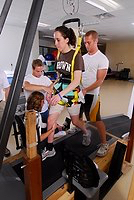
I had a stroke at fifteen. When I woke up paralyzed running was nowhere near the list of things I thought I’d do again. When I finally got to my therapy program, I told them my goal was to run. They started me walking on a treadmill. Then faster. Then one day my physical therapist looked at me and said, “Okay, Kelsey, today is the day we’re going to try to run.” I told her the truth. “But I don’t remember how.” She said, “Let’s try.”
They had me in a harness that took most of my weight off the treadmill. The belt started moving. And I ran.
I started crying. I was terrified I had forgotten my own body. She wasn’t scared at all. She knew I could do it before I believed it myself.
I’ve spent the last ten years as a healthcare keynote speaker, standing in front of the people who do that work — physical therapists, nurses, aides. Somebody says, “Please give a warm welcome to Kelsey Tainsh,” and I tell them about the therapist who said “let’s try” the day I said I don’t remember how.
She never called it a good goal and left it there. She moved the belt a little faster, then a little faster, and stayed close the whole time. That is what belief looks like.
At the Shepherd Center, in this therapy program, I was told, “You can.” And I learned to run.
— I’m Not Limping. That’s Swagger!, Chapter 1
She said let’s try. So we tried.
What “let’s try” does that “good goal” doesn’t
- Say “let’s try” out loud before the patient believes it.
- Start smaller than the goal, then move the belt faster.
There’s a lot more of this in my book, I’m Not Limping. That’s Swagger! — the whole slow climb from a wheelchair to being fully independent again. If your nurses and therapists could use a morning that names what “let’s try” really does for a patient, that’s my favorite conversation to have as a healthcare keynote speaker.
Book: https://kelseytainsh.com/kelseys-book/ · Speaking: https://kelseytainsh.com/nursing/
Quote Q09 pulled from Chapter 1. Confirm against print edition before publishing.
Frequently Asked Questions
What can relearning movement after a stroke look like?
Recovery can involve breaking a large goal into smaller, supported attempts. In this story, running did not begin with an unsupported sprint; it began with walking, gradually increasing speed, and then trying to run in a harness that carried much of the body weight. The progression made a frightening goal testable.
Why does a therapist’s belief matter during rehabilitation?
A patient may reach a point where fear says a movement is impossible even when the therapy team sees readiness for the next step. Calm confidence from a therapist can make the attempt feel possible. The therapist is not doing the work for the patient; they are creating a safer moment in which the patient can try.
Why are small progressions important when someone is working toward a major recovery goal?
Big goals can feel abstract and overwhelming. Smaller progressions turn the goal into a sequence: walk, go a little faster, add support, then try the next movement. Each successful step gives the patient evidence that the next step may also be possible.
Recent Comments