
TL;DR: Often, yes, and the feeling lies. I rolled into the Shepherd Center at six in the evening, stared at the sunset, and thought I’d be in a wheelchair forever. I was fifteen and completely sure of it.I was also completely wrong, and the next morning the work began to prove it.
We pulled into the Shepherd Center at six in the evening. My dad got out of the car, picked me up and put me in the wheelchair. When I looked up there was a beautiful sunset. I remember staring at that sunset and thinking one thing. I’m never going to get better. I’m going to be in a wheelchair forever.
Boy, was I wrong.
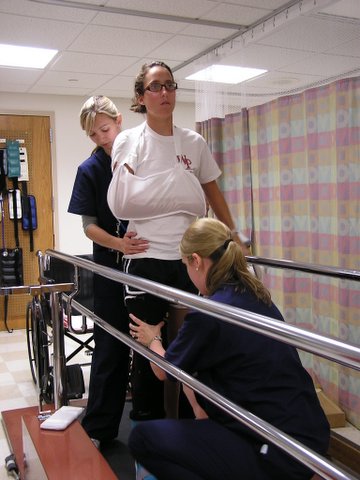
The founder, Mrs. Shepherd, met us at the door and walked us to my room. A physical therapist and a nurse were already waiting. I asked for a shower that night. They asked to wait till the next morning, and I was annoyed. But I had no idea they were about to spend months proving my sunset math wrong.
I’ve spent the last ten years as a healthcare keynote speaker, telling that story to the people who help others get better. Somebody says, “Please welcome Kelsey Tainsh,” and I describe the exact moment a nurse and a physical therapist changed my life. The moment I felt hope again because of them.
I realized I had a choice. I could sit in a wheelchair for the rest of my life, or I could fight. And it was time for me to fight.
— I’m Not Limping. That’s Swagger!, Chapter 1
The sunset said forever. It was lying.
There’s more of this in my book, I’m Not Limping. That’s Swagger! — including how a girl who was sure she’d never walk ended up snowboarding. If your rehab team or nurses could use a reminder of the incredible difference they make in the life’s of their patients and families everyday that’s my favorite kind of talk to give as a healthcare keynote speaker.
Book: https://kelseytainsh.com/kelseys-book/ · Speaking: https://kelseytainsh.com/nursing/
Quote Q04 pulled from Chapter 1. Confirm against print edition before publishing.
Frequently Asked Questions
Is it normal for rehabilitation to feel hopeless at the beginning?
It can feel that way, particularly when a person’s current limitations are so different from the life they knew before. This article describes that early hopelessness as a feeling, not a reliable forecast. The first days of rehabilitation may say very little about what months of work and support can eventually produce.
Why can the beginning of recovery feel more permanent than it really is?
When someone is exhausted, dependent on others, and unable to do familiar things, the present can feel like proof of the future. The story challenges that assumption. A difficult first night can be real without being a final verdict on what recovery will become.
How can rehabilitation professionals help a patient rebuild hope?
Hope often grows through concrete experiences rather than speeches. A nurse or therapist can create the next manageable task, stay close while the patient attempts it, and keep treating improvement as possible before the patient is ready to believe that on their own.
Recent Comments